

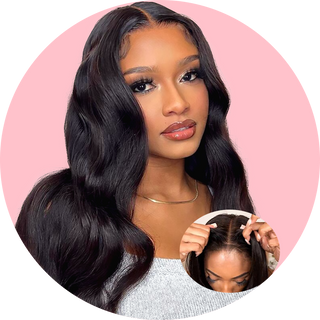


If you install lace wigs for clients all week, you already know this:
The install itself is not always the part that eats up your time.
Sometimes it is everything you have to do before the wig even touches your client's head.
You open a new unit and immediately notice thick knots.
The hairline is too dense.
The front looks almost perfectly straight.
Now you have to pull out the bleach, mix developer, process the knots, rinse the unit, dry it, tweeze the hairline, check the density, tweeze again, and only then start preparing for the actual install.
For one wig? Maybe that is manageable.
For a busy salon doing several appointments a day?
That extra prep adds up fast.
That is why the conversation around bleached knots vs pre plucked wigs matters more than it may seem. These are not simply beauty features. For stylists, salon owners, wig sellers, and wholesale buyers, they can directly affect installation speed, labor, consistency, and the finished look.
At CLJhair Factory, we look at both features from the production side.
Instead of expecting every stylist to completely customize a factory-new wig from scratch, part of that work can already be completed during manufacturing.
Let's break down what each process actually does and why having both can make such a big difference.
What Are Bleached Knots on a Lace Wig?
First, let's talk about the tiny dots you see under the lace.
When human hair is ventilated into a lace closure or frontal, individual strands are tied to the lace. These attachment points create tiny knots.
On naturally dark hair, those knots can look black or dark brown.
And when you place the lace against the scalp?
You may see little dots instead of the illusion of hair actually growing out of the skin.
That is where knot bleaching comes in.
Bleaching knots lightens those attachment points.
The goal is not to bleach the entire root of the hair.
The goal is to carefully lighten the knot itself so that it becomes less noticeable underneath the lace.
When done properly, bleached knots can help create:
· Less visible dark dots
· A cleaner-looking part
· A more scalp-like appearance
· A softer lace transition
· Better results in close-up photos and videos
For HD lace especially, this detail matters.
Thin lace can melt beautifully into the skin, but if you can still clearly see dark knots underneath it, the final result may not look as seamless as it should.
So yes, the lace matters.
But the knots matter too.

What Is a Pre Plucked Wig?
Now let's talk about the hairline.
A brand-new lace wig can sometimes come with a hairline that is simply too perfect.
Too straight.
Too even.
Too dense from the very first row.
Real hairlines usually do not grow like that.
Natural hair density gradually changes around the forehead and temples. There may be softer sections, thinner areas and subtle irregularities.
That is what pre-plucking tries to recreate.
A pre plucked wig has already had part of the density removed around the front hairline before it reaches the stylist or customer.
The result should be a softer transition from skin to hair.
Instead of:
skin → thick wall of hair
you want:
skin → fine hairline → gradually increasing density
That little change can make a huge difference.
A properly pre-plucked hairline can help the wig look more natural even before the stylist starts laying the lace.
Bleached Knots vs Pre Plucked Wigs: They Are Not the Same Thing
This is where some buyers get confused.
Bleached knots and pre-plucking are two completely different customization processes.
They solve different problems.
|
Feature |
Bleached Knots |
Pre Plucked Hairline |
|
Main purpose |
Reduce visible dark knots |
Reduce excessive hairline density |
|
Where it matters most |
Lace and parting area |
Front hairline and temples |
|
Main visual benefit |
More scalp-like lace |
More natural hairline shape |
|
Salon benefit |
Less knot-processing work |
Less tweezing and shaping |
|
Risk when done poorly |
Weak knots and shedding |
Thin spots or over-plucking |
|
Best result |
Combined with natural lace and hairline density |
Combined with small, well-bleached knots |
Think of it like this:
Bleached knots improve what you see through the lace.
Pre-plucking improves the shape and density of the hair coming out of the lace.
One does not replace the other.
For a really clean installation, you usually want both working together.
Why Stylists Care About Factory-Prepared Wigs
Let's talk salon reality.
A client does not care that you spent an extra hour bleaching and plucking her unit before the appointment.
She sees the finished result.
You see the labor.
That is a big difference.
If your wig arrives completely untouched, a stylist may still need to:
1. Inspect the knots.
2. Prepare the bleaching mixture.
3. Bleach the knots.
4. Monitor processing.
5. Rinse and wash the lace.
6. Dry the wig.
7. Separate the hairline.
8. Tweeze the front.
9. Tweeze the temples.
10. Check the density again.
11. Correct uneven areas.
12. Then start installation and styling.
A professional stylist may be good at this.
But being good at something does not mean you want to repeat it unnecessarily on every single unit.
When a supplier handles more customization before shipment, that preparation time can be reduced significantly.
That means the stylist can spend more appointment time on:
fit, melt, styling and the final look.
And that is where the money is.

Why Factory Bleached Knots Can Save Salon Prep Time
There is one important thing we need to say about knot bleaching:
More bleaching is not automatically better.
That is a mistake.
Bleaching is still chemical processing.
If the knots are processed too aggressively, the hair attachment point can become weaker.
And weak knots can eventually mean more shedding.
So from a factory perspective, the objective is not:
Make every knot as blonde as possible.
The objective is:
Reduce knot visibility while maintaining enough strength for normal wear.
That balance matters.
At CLJhair Factory, factory preparation means the lace and knots can be inspected as part of production rather than leaving the entire job for the stylist after delivery.
Factors that matter include:
· Knot size
· Hair color
· Lace type
· Front density
· Processing time
· Finished knot color
· Hair-root strength
· Shedding after processing
That last point is important.
A beautiful knot bleach job means very little if the frontal starts shedding excessively afterward.
Professional factory processing should aim for appearance and durability, not appearance alone. Over-processing knots can weaken them and increase shedding, which is why careful processing matters.
Why Factory Pre Plucking Is Different From Random Tweezing
Anyone can take a pair of tweezers to a frontal.
That does not automatically mean the hairline will look natural.
Good pre-plucking is really about density control.
The hairline should not suddenly go from extremely thin to extremely thick.
There should be a gradual visual transition.
That is especially important around:
· The center hairline
· Temple areas
· Side sections
· Parting zones
And here is the part people sometimes forget:
Over-plucking cannot easily be reversed.
Once too much hair has been removed from one section, you cannot simply put it back with tweezers.
That is why factory pre-plucking needs consistency.
The goal is not to make the front as thin as possible.
The goal is to leave enough density so that the hairline already looks softer while still giving professional stylists room to customize it for their individual client.
That is the sweet spot.
Does Pre Plucked Mean the Stylist Never Needs Tweezers?
Not necessarily.
And we think suppliers should be clear about that.
Every client's hairline is different.
Some clients want a very soft, highly customized frontal.
Some prefer more density.
Some wear a deep side part.
Some want a middle part.
Some stylists also have their own signature installation style.
So a good factory-pre-plucked wig should not remove every customization decision from the hairstylist.
Instead, it should provide a professional starting point.
The stylist might still make small adjustments.
But there is a big difference between:
five minutes of refining
and
starting with a solid wall of hair.
What Happens When You Combine Bleached Knots + Pre Plucked Hairline?
This is where the transformation really happens.
Bleached knots reduce visible dots.
Pre-plucking reduces unnatural density.
Together, they attack two of the biggest giveaways of a lace wig.
Imagine looking at a frontal up close.
Instead of seeing:
· Black dots
· Heavy density
· A straight artificial-looking front
· A visible lace grid
you see:
· Softer knots
· Fine hairs near the front
· Gradually increasing density
· A cleaner parting area
· Lace that is easier to melt into the skin
That is why for premium lace wigs, especially HD lace wigs, these preparation steps work so well together.
You are not relying on one trick.
You are improving the entire front construction.

Bleached Knots vs Pre Plucked Wigs for Salon Efficiency
Now let's bring everything back to business.
For salons, efficiency matters.
Suppose you install several wigs every day.
Saving a little preparation work on each unit can create more room in your schedule for:
· Additional clients
· Styling upgrades
· Consultations
· Content creation
· Lace maintenance
· Repeat appointments
There is also another benefit:
More consistent starting units.
When you purchase multiple wigs for a salon, you do not want one frontal to arrive beautifully customized and another one to need completely different preparation.
Consistency matters when you are running a business.
That is why salon owners should evaluate a wig supplier based on more than simply:
Is it human hair?
Ask more specific questions.
Questions Salon Buyers Should Ask a Wig Supplier
Before ordering lace wigs in bulk, ask:
1. Are the knots pre-bleached?
Do not assume that every lace wig comes with fully prepared knots.
2. Is the hairline actually pre-plucked?
There is a difference between removing a few hairs and creating a real density gradient.
Look closely at the front.
3. What lace construction is being used?
HD lace, transparent lace and different frontal or closure constructions can produce different results.
4. Is the frontal still full enough to customize?
A stylist needs flexibility.
If the hairline has already been heavily over-plucked, that flexibility is gone.
5. How does the factory control shedding after bleaching?
This is especially important when buying in volume.
6. Can customization be standardized across multiple units?
For salons and wholesale buyers, consistency is just as important as the result on one sample.
Which Is More Important: Bleached Knots or Pre Plucked Hairline?
If you are asking which one you should choose, our answer is simple:
They solve different problems, so ideally you should not have to choose.
If the knots are beautifully bleached but the hairline is extremely dense, the wig may still look artificial.
If the hairline is perfectly pre-plucked but every knot looks like a dark dot, the lace may still give the wig away.
For the most salon-friendly preparation, you want:
Good lace + properly processed knots + controlled hairline density.
That combination provides a much better foundation for a professional install.
What CLJhair Factory Looks for During Production
At CLJhair Factory, we do not look at pre-customization as a simple checkbox.
“Pre-plucked?”
Check.
“Bleached knots?”
Check.
That is not enough.
The actual result matters.
For salon-oriented wigs, we pay attention to factors such as:
Knot appearance
The knots should be less obvious without unnecessarily weakening the root.
Hairline gradient
The front should transition naturally instead of looking like one uniform wall of hair.
Front density
It should look realistic while leaving enough hair for further stylist customization.
Lace condition
Bleaching and handling should not leave the lace unnecessarily damaged.
Shedding
The frontal needs to remain secure after customization.
Finished appearance
At the end of the day, the lace should give the stylist a clean base to work with.
That is what factory preparation is supposed to do.

Why This Matters for Wholesale Wig Buyers Too
You do not have to be the person installing the wig for these details to matter.
If you run:
· A wig store
· A beauty supply business
· A salon
· A wholesale hair business
· A dropshipping business
· A private-label wig business
your customer still experiences the same product.
And customers today look at lace closely.
They take HD videos.
They record installation tutorials.
They take selfies under strong lighting.
They zoom in.
A frontal that looked “good enough” several years ago may not meet the expectations of today's wig customer.
That means suppliers need to think beyond hair length, density and texture.
The construction around the hairline matters just as much.
Salon Time Is Money
For professional stylists, a wig that needs less preparation is not just easier.
It can be more profitable.
Think about what happens when unnecessary preparation is reduced.
The stylist spends less time correcting the product and more time actually performing the service the client came in for.
Instead of spending the beginning of every appointment fighting with an overly dense frontal, the stylist can focus on:
· Braiding and foundation
· Positioning
· Adhesive application
· Lace melting
· Parting
· Hot-comb work
· Cutting
· Curls or straightening
· Baby hair if requested
· Photography and final content
That workflow makes more sense.
Your supplier should make your job easier, not create extra work before every install.
Bleached Knots vs Pre Plucked Wigs: The Bottom Line
So, bleached knots vs pre plucked wigs — which one is better?
Neither one wins.
Because they do different jobs.
Bleached knots help reduce the appearance of dark attachment points underneath the lace.
Pre-plucked hairlines reduce excess density around the front to create a more natural growth pattern.
For salon-quality results, the best approach is often to combine both.
And from a stylist's perspective, having these processes completed properly at the factory can mean:
· Less preparation
· Faster installations
· Fewer risky DIY corrections
· More consistent units
· Cleaner lace results
· More time for styling
· A better client experience
That is the bigger point.
A premium wig is not only about how beautiful the hair looks while it is sitting in the package.
It is about how efficiently the stylist can turn that unit into a finished install.
At CLJhair Factory, that is how we think about wig production.
The closer we can bring the wig to a professional-ready starting point without compromising durability or customization flexibility, the less unnecessary work there is for the stylist at the other end.
And for a busy salon?
That matters.
FAQs About Bleached Knots vs Pre Plucked Wigs
Are bleached knots and pre plucked hairlines the same thing?
No. Bleached knots lighten the small knots where hair is attached to lace, while pre-plucking removes some hair around the front to create a softer, more natural hairline.
Do bleached knots make a wig look more natural?
Yes. Properly bleached knots can make dark attachment points less visible, creating a cleaner scalp-like effect through the lace.
Does a pre plucked wig still need customization?
Sometimes. A properly pre-plucked wig gives the stylist a more natural starting point, but minor customization may still be needed depending on the client's hairline and preferred style.
Can bleaching knots cause shedding?
Over-processing can weaken knots and increase shedding. This is why controlled processing is important. The goal should be to reduce knot visibility without unnecessarily weakening the construction.
Is a pre plucked wig better for professional hairstylists?
It can be more efficient because the stylist does not have to remove as much density before installation. However, the hairline should not be over-plucked because professional stylists still need room for individual customization.
What is best for a natural-looking HD lace wig?
A quality HD lace wig works best when several details come together: fine lace, properly processed knots, a realistic hairline density and professional installation.
Are factory-prepared wigs better for salons?
For many salons, yes. Factory-prepared wigs can reduce repetitive preparation work and give stylists a more consistent starting point across multiple units.
Looking for Salon-Ready Human Hair Wigs?
If you are sourcing wigs for a salon, wig business or wholesale hair collection, do not judge a supplier by texture and length alone.
Look closely at the lace.
Look at the knots.
Look at the density around the hairline.
And most importantly, ask yourself:
How much work will my stylist still have to do when this wig arrives?
At CLJhair Factory, we focus on producing human hair wigs that give professional buyers a better starting point for installation, including customizable lace options, natural hairline preparation and factory-controlled wig production.
Because the best supplier is not simply the one who ships you a wig.
It is the one who helps you spend less time fixing the product and more time serving your customers.