

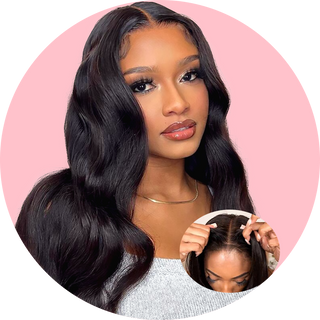


Introduction: One Hair Look, Two Completely Different Vibes
Holiday season is the perfect time to switch up your hairstyle. One day, you might want a sleek, bone-straight look that moves effortlessly when you turn your head. The next, you may want full, defined waves for a holiday party, family gathering, or New Year's Eve celebration.
For many Black women, a silk press delivers that smooth, glossy finish without requiring a permanent chemical straightening treatment. And if you wear human hair wigs or sew-in extensions, you can recreate the look with the right hair and a careful styling routine.
Here's where raw deep wave hair becomes especially interesting. Although it starts with a beautiful, defined wave pattern, quality raw human hair can offer the flexibility to wear it straight, wavy, or somewhere in between.
At CLJhair, we believe versatility is one of the most practical things to look for when choosing hair extensions. In this guide, you'll learn how to achieve a silk-press-inspired finish on deep wave hair, how to protect the strands while straightening, and how to bring the waves back after washing.
One important distinction: straightening extension hair is not exactly the same as silk pressing your natural hair. A traditional silk press includes cleansing, blow-drying, and flat-ironing natural textured hair. When you apply similar techniques to a deep wave wig or sew-in, the goal is a comparable silky, straight finish.
1. Can You Silk Press Raw Deep Wave Hair?
Yes. Raw human hair can generally be straightened with a flat iron when it is in suitable condition and the styling is performed correctly. The key is understanding what makes the hair curly in the first place and how heat affects its texture.
Deep wave hair has a pronounced S-shaped or flowing wave pattern. Depending on the product and how the texture is created, the pattern may be natural, steam-set, or otherwise processed. The word raw alone does not guarantee that every deep wave product will behave identically.
With suitable raw hair, straightening can give you a sleek, elongated look while allowing you to enjoy the original wave pattern again after washing. However, no hair product is completely immune to heat damage. Repeated high temperatures, excessive passes, and poor maintenance can permanently loosen the pattern.
Before straightening your CLJhair deep wave bundles or wig, check that the hair is clean, detangled, and free from excessive dryness or damage. If the hair has been bleached, dyed, or previously exposed to high heat, take extra care.
The bottom line: Deep wave hair can offer two distinct looks, but preserving its versatility depends on hair quality, texture-setting methods, styling technique, and aftercare.
2. Why Raw Hair Is a Good Choice for Versatile Styling
When shopping for hair extensions, it's easy to focus only on length, density, and curl definition. Those details matter, but you should also consider how the hair performs when you change your style.
Raw human hair is valued for its natural appearance and styling flexibility. Depending on its source and processing history, it may offer a realistic texture, natural movement, and the ability to be styled in different ways.
Here are three reasons versatility matters.
First, you can change your look without buying another texture. Deep wave hair can provide fullness and definition for everyday wear, while straightening can create a polished look for special occasions.
Second, you can get more styling options from one installation. Whether you wear a lace wig, sew-in, or bundles with a closure or frontal, the ability to change your finish gives you more flexibility for different outfits and events.
Third, you can make a more informed investment. Compare hair by its weight, length, construction, quality, and expected maintenance—not simply by the word raw on the product page. Raw hair can be more expensive than some processed alternatives, but pricing varies widely with origin, length, weight, and construction.
CLJhair encourages shoppers and wholesale buyers to evaluate how hair performs in actual use. Consistent texture, manageable strands, and appropriate care instructions are more meaningful than marketing claims alone.

3. What You Need Before Straightening Deep Wave Hair
Preparation makes a noticeable difference in how smoothly your hair straightens. You do not need a complicated collection of products, but you do need the right basics.
Prepare the following:
· A gentle shampoo: Removes dirt, sweat, and styling-product buildup.
· A moisturizing conditioner: Helps improve softness and detangling.
· A wide-tooth comb: Helps separate the strands with less unnecessary pulling.
· A heat protectant formulated for human hair extensions: Follow the product's instructions and make sure the hair can dry completely before using a flat iron.
· A blow-dryer with a concentrator nozzle: Helps stretch and smooth the waves before flat-ironing.
· A quality flat iron with adjustable temperature settings: Lets you control the heat rather than relying on a fixed, potentially excessive setting.
· Sectioning clips: Keep the hair organized so you can work in small sections.
· A silk or satin scarf or bonnet: Helps protect your finished style during sleep.
Avoid loading the hair with heavy oils or greasy products before straightening. Excess buildup can weigh down the strands, and applying oils without checking their heat compatibility may not provide the protection you need.
A heat protectant can help reduce styling stress, but it does not make high heat harmless. Dermatologists recommend using flat irons on dry hair, choosing low or medium heat where possible, and limiting repeated exposure to hot tools. Source: American Academy of Dermatology.
4. Step-by-Step: How to Straighten Deep Wave Hair
Step 1: Detangle Before Washing
Start at the ends and gradually work upward with a wide-tooth comb or your fingers. Support the hair with your other hand to reduce pulling, especially near the wefts, knots, or lace construction.
Do not drag a comb through tangled waves from the roots to the ends in one motion. This can cause unnecessary shedding and breakage.
If your hair is installed, work carefully around the attachment points and avoid pulling on the lace or braids.
Step 2: Wash and Condition
Use lukewarm water and a gentle shampoo. For bundles or a wig, guide the hair downward and avoid rough scrubbing, twisting, or piling the lengths together.
Apply conditioner through the lengths and ends, following the product instructions. Detangle gently while the hair is conditioned, then rinse thoroughly.
After washing, blot the hair with a soft towel instead of rubbing it aggressively. The goal is to remove excess water without creating additional tangles.
Step 3: Apply Heat Protectant
Distribute a suitable heat protectant evenly through the hair according to its directions. Avoid applying so much product that the strands become coated or sticky.
If your product requires blow-drying before flat-ironing, allow enough time for the hair to dry completely. Never flat-iron damp extensions. Excess moisture trapped inside strands during high-heat styling can cause serious damage.
Step 4: Blow-Dry Until Smooth
Divide the hair into manageable sections. Using a blow-dryer with a concentrator nozzle, direct the airflow downward along the strands while gently stretching the hair with a brush.
Keep the dryer moving rather than holding it against one area for too long. Use a moderate setting and work patiently until the hair is fully dry.
This step is important because a smoother blow-dry reduces the amount of work your flat iron needs to do.
Step 5: Flat-Iron in Small Sections
Separate the hair into thin, even sections. Smaller sections allow the plates to contact the hair more consistently, helping you achieve a smoother finish without repeatedly ironing the same area.
Start with the lowest temperature that effectively straightens a test section. There is no single temperature that is appropriate for every wig or bundle. Hair condition, strand characteristics, previous coloring, the tool itself, and the manufacturer's guidance all matter.
Move the iron steadily from the upper part of the section toward the ends. Avoid clamping down for too long, making multiple unnecessary passes, or using the highest setting simply to get a faster result.
For an especially sleek finish, you can use a fine-tooth comb just ahead of the flat iron if you are comfortable with the technique. Keep the movement controlled and avoid pulling on the roots or attachment points.
Step 6: Finish Lightly
Once the hair is straight, let it cool before brushing or shaping it. If needed, use a small amount of lightweight finishing serum that is suitable for heat-styled hair.
Too much product can leave the hair greasy and reduce its natural movement. A good silk-press-inspired finish should look smooth and glossy while still feeling soft and light.

5. How to Maintain Your Silk Press Through the Holidays
A fresh, straight style can look amazing when you first finish it, but humidity, perspiration, and everyday friction can gradually affect the results. With a little maintenance, you can help your straightened deep wave hair stay smooth for longer.
Wrap Your Hair Before Bed
Use a silk or satin scarf to wrap the hair gently around your head, or wear a satin bonnet that comfortably covers the full length. A satin pillowcase is another useful option.
These materials help reduce friction compared with many ordinary cotton fabrics. Less friction means fewer tangles and less disruption to your style.
Keep Moisture and Humidity in Mind
Moisture can encourage a wave pattern to return, which is why rain, steamy bathrooms, and sweaty workouts may affect a silk press. If you want to maintain a straight finish for a holiday event, protect your hair from unnecessary moisture.
You do not need to avoid normal activities. Just understand that a straight style may not stay perfectly straight in humid conditions, especially if your original hair texture is strongly wavy.
Avoid Excessive Touching and Brushing
Constant brushing, combing, or running your fingers through the hair can create friction and disturb the finish. Use a gentle touch and detangle only when necessary.
Be Careful With Touch-Ups
It may be tempting to run a flat iron over your hair every morning, but repeated heat exposure adds up. Before considering another pass, ask yourself whether a gentle brush, a wrap, or a small adjustment would be enough.
The American Academy of Dermatology recommends limiting heat styling and using the lowest effective temperature. These principles apply to human hair extensions as well as your own hair. Dermatologist hair-styling guidance.
6. How to Restore Deep Wave Curls After Washing
This is the part many shoppers want to understand before investing in deep wave hair: after wearing it straight, will the original curls return?
A good deep wave texture may return after washing, but the result is not guaranteed. The outcome depends on how the wave was created, the hair's condition, and how much heat it has received. Washing can help release a temporary straightened style, but it cannot reverse permanent heat damage.
Here's how to give your deep wave hair the best chance of returning to its original pattern.
Step 1: Let the Hair Cool Completely
If you've recently straightened the hair, wait until it has cooled before washing or manipulating it. Do not attempt to force the waves back with a curling iron immediately after flat-ironing.
Step 2: Detangle Gently
Start at the ends and work upward, removing knots carefully. If the hair is very tangled, use your fingers first and a wide-tooth comb where appropriate.
Avoid pulling on the strands or aggressively brushing through the lengths. This is particularly important for long extensions, where tangles can become tighter toward the ends.
Step 3: Cleanse Away Styling Buildup
Wet the hair thoroughly and apply a gentle shampoo. Work it through the scalp area of a wig or the lengths of detached bundles without rubbing the strands together.
Rinse thoroughly. If you've used a substantial amount of styling product, you may need another gentle cleanse, but avoid unnecessary repeated washing.
Step 4: Condition for Softness and Manageability
Apply a moisturizing conditioner through the lengths and ends. Allow it to work according to the product instructions, then detangle gently while the hair is slippery with conditioner.
Rinse as directed. Hair that feels soft and manageable is generally easier to style into a defined wave pattern than hair weighed down by buildup or full of tangles.
If the hair feels unusually brittle, a suitable deep-conditioning treatment may help improve its feel and manageability. Conditioning does not, however, repair permanently heat-altered hair.
Step 5: Encourage the Wave Pattern
After rinsing, gently squeeze excess water from the hair with a soft towel. Apply a lightweight leave-in conditioner or curl-defining product if appropriate for the hair and the product's instructions.
For detached bundles or a wig, gently scrunch the lengths upward toward the wefts or cap to encourage the original wave formation. Avoid twisting or pulling the hair tightly.
For a stronger, more uniform result, arrange the hair into its natural wave shape with your fingers and let it dry without excessive handling.
Step 6: Let the Hair Dry and Assess the Results
Air-drying is often a practical choice because it limits additional heat exposure. Lay a wig securely on a suitable stand or arrange detached bundles so that they can dry evenly. Avoid putting wet hair away in a bag or enclosed storage space.
Once the hair is completely dry, examine the wave pattern. You may find that the deep waves have returned with good definition, or that they look softer and looser than before.
If the original pattern does not return fully, don't immediately assume that the hair is poor quality. A texture that has been repeatedly exposed to high heat may have changed permanently. If the hair was chemically treated or had a steam-set pattern, its response may also differ from that of naturally wavy raw hair.

7. How to Tell Whether Your Deep Wave Hair Has Been Heat-Damaged
Understanding the difference between a temporary styling change and heat damage can help you make better decisions about hair care.
Here are a few signs worth watching for:
· The waves return unevenly: Some sections regain their original shape while others remain noticeably straighter.
· The hair feels rough or unusually dry: The strands may feel less flexible and more difficult to detangle than before.
· The ends appear frizzy or brittle: Damaged ends may look thinner, rougher, or less defined.
· The texture no longer responds as expected: After washing and conditioning, some sections may remain limp or lose their original wave definition.
These signs are not definitive proof of heat damage on their own. Product buildup, tangling, and differences in the original texture can also affect appearance and feel.
If you notice these changes, stop flat-ironing the hair and focus on gentle cleansing, conditioning, and detangling. Do not keep increasing the temperature in an attempt to force a straighter finish.
It is also worth remembering that raw human hair is not indestructible. High-quality hair can still become damaged through excessive heat, rough handling, chemical treatments, or poor storage. Quality gives you a better starting point; proper care helps you preserve it.
8. Common Questions About Silk Pressing Raw Deep Wave Hair
Can I straighten deep wave hair every week?
It is better to avoid making frequent flat-ironing a routine. Every heat session adds stress, and repeated high temperatures can weaken the strands or permanently loosen the wave pattern. For occasional straight styles, use a heat protectant, start with a low effective temperature, and minimize repeated passes.
Will raw deep wave hair return to its original curls after one flat-iron session?
It may, especially if the hair is in good condition and the straightening is temporary. However, the result depends on the original texture and how much heat was used. Even one session can cause damage if the temperature is excessive or the hair is not completely dry.
Can I straighten a deep wave wig while it is installed?
You can generally straighten a human hair wig while it is installed if its construction and care instructions permit heat styling. Work in small sections, keep the iron away from the lace and cap, and avoid pulling on the hairline. For a delicate HD lace wig, take extra care around the knots and lace material.
If you are unsure about the wig's heat tolerance, test a small, inconspicuous section first.
Does raw hair always return to its original wave pattern?
No. Raw hair is not a guarantee of complete curl-pattern recovery. Some products have naturally occurring textures, while others may have textures created or refined through steam setting. The hair's processing history, previous heat exposure, and maintenance all influence the result.
Before purchasing, ask whether the deep wave texture is natural or set, what heat-styling guidance is recommended, and what results you can reasonably expect after washing.
How long does a silk press last on deep wave extensions?
There is no fixed timeline. Your results depend on humidity, perspiration, daily activities, installation method, and maintenance. A carefully maintained straight style may last several days or longer, but strongly wavy hair may begin to show its original texture sooner in humid conditions.
Is deep wave hair better than straight hair if I like changing styles?
It depends on your preferences. Straight hair is convenient if you primarily wear sleek styles, while deep wave hair gives you a defined texture that you can also straighten when appropriate. If you enjoy switching between a silk-press-inspired finish and full waves, deep wave hair may offer the flexibility you want.
Can wholesale buyers use this information to help customers?
Absolutely. For salons, wig retailers, and hair distributors, explaining heat-styling limitations and curl-pattern recovery helps customers make informed choices. Clear care instructions can also reduce misunderstandings about texture changes and product performance.
Wholesale buyers should evaluate samples, confirm the manufacturer's texture-setting process, and test straightening and washing on representative samples before making large purchasing decisions.
9. Choosing Deep Wave Hair That Fits Your Styling Routine
Before purchasing a wig or bundles, think about how you actually wear your hair.
If you prefer a sleek finish most days, straight hair may be the most convenient option. If you love volume and definition but want the freedom to switch to straight hair for special occasions, deep wave extensions may be a better fit.
When evaluating raw hair, look beyond the initial appearance. Consider strand quality, fullness, consistency across bundles, ease of detangling, and how the hair responds to washing and styling.
For CLJhair customers, this is especially important when choosing hair for personal use or stocking products for a salon or retail business. A clearly defined texture, realistic care expectations, and consistent product quality help create a better experience for both the stylist and the wearer.
If you are buying wholesale, test the same texture across different lengths and batches where possible. Record how the hair behaves before straightening, immediately after washing, and after it dries. This gives your team a more reliable basis for answering customer questions than relying on a product photo alone.

Final Thoughts: Enjoy the Straight Look Without Giving Up Your Waves
A silk-press-inspired style can be a beautiful way to change your look for the holidays. With the right deep wave hair, careful preparation, controlled heat, and consistent aftercare, you can enjoy a smooth, straight finish while giving the original wave pattern the best chance of returning after washing.
Remember three essentials: always straighten completely dry hair, use the lowest effective heat setting, and avoid repeated flat-ironing. When you want your waves back, cleanse gently, condition, encourage the natural pattern, and let the hair dry without unnecessary manipulation.
Most importantly, don't expect raw hair to be indestructible. Its versatility is valuable, but preserving that versatility requires good habits.
At CLJhair, we believe choosing the right human hair should give you flexibility, confidence, and a styling routine that works for your lifestyle. Whether you're shopping for your own holiday look or sourcing hair for your business, understanding how deep wave hair responds to straightening will help you get more out of your investment.
Explore CLJhair human hair options and choose a texture that works for your style, your routine, and the looks you love to wear.