

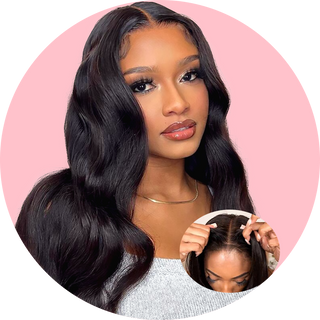


1. Why Wig Density Matters More Than You Think
You found the perfect texture. The lace looks good. The length is exactly what you wanted.
But when you put the wig on, something still feels off.
Maybe it looks thinner than you expected. Maybe it feels way fuller than the photos. Or maybe you ordered the same density as your last wig, but somehow the two units do not look the same.
This is where wig density comes in.
For Black women who wear wigs regularly, density can completely change the finished look. It affects how much volume you see, how the hair moves, how heavy the wig feels, how easily you can style it, and even how natural the overall silhouette appears.
At CLJhair Factory, density is also one of the specifications we believe buyers should understand clearly before ordering—especially salon owners, wholesalers, stylists, and customers purchasing human hair wigs.
This wig density guide (150% vs 180% vs 250%) breaks down three popular density options so you can understand what each one actually looks like and choose based on the result you want—not just the biggest number.

2. What Does Wig Density Actually Mean?
Wig density describes the overall amount of hair used to create a wig, usually expressed as a percentage.
In simple terms:
The higher the density percentage, the fuller the wig will generally look.
A 150% density wig offers natural, balanced fullness, while a 180% density wig provides noticeably more volume. A 250% density wig is designed to create a much fuller, more dramatic appearance.
But there is an important detail that often gets overlooked:
Density percentage is not the whole story.
There is no single visual rule saying every 180% wig must look exactly the same.
The finished appearance can also be affected by:
· Hair length
· Hair texture
· Strand thickness
· Layering
· Cap construction
· Lace area
· Hair distribution
· Styling
· Curl pattern
· How full the ends are
For example, a 20-inch curly wig and a 30-inch straight wig can both be labeled 180% density while looking noticeably different.
That is why comparing density only by percentage can create unrealistic expectations.
3. 150% vs 180% vs 250% Wig Density: The Quick Comparison
Before we get into each density, here is the easiest way to understand the difference.
|
Density |
Overall Look |
Weight/Feel |
Best For |
Styling Result |
|
150% |
Natural with extra body |
Lightweight |
Everyday wear, beginners |
Balanced and versatile |
|
180% |
Full and noticeable |
Medium |
Most wig wearers, glam everyday looks |
Full without being extreme |
|
Extra full and dramatic |
Heavier |
Glam styles, long lengths, high-volume looks |
Maximum volume |
Think of these percentages as different beauty goals—not different levels of quality.
A 250% wig is not automatically “better” than a 150% wig.
It simply contains more hair and creates a different visual effect.
The right choice depends on how you want your finished wig to look and feel. If you prefer realistic everyday fullness, 150% may be enough. If you want more body without going extremely thick, 180% is often the sweet spot. And if your goal is maximum volume and statement hair, 250% gives you that extra-full finish.

4. 150% Wig Density: The Natural Everyday Sweet Spot
For many customers, 150% density is where natural appearance and practical fullness meet.
It provides enough body to create a healthy, polished look without immediately moving into noticeably thick or glamorous territory.
A well-constructed 150% human hair wig should still move naturally and should not feel unnecessarily bulky around the head.
That makes it a strong option for everyday wear.
Who Should Choose 150%?
Consider 150% if you:
· Want realistic everyday fullness
· Are buying your first human hair wig
· Prefer natural-looking straight or body-wave styles
· Want enough hair for styling without excessive weight
· Wear wigs for long periods
· Prefer a softer silhouette around the face
For salon customers who say, “I want it full, but I still want it to look natural,” 150% is often a useful starting point.
It is also a practical density for customers who like to add curls or waves themselves. Styling can create additional visual volume without requiring an extremely dense wig.
For shorter and medium-length wigs, 150% can look surprisingly full because the hair is concentrated over a smaller overall length. On longer wigs, however, the same density can create a slimmer silhouette toward the ends.
[IMAGE 3 — Place here]
5. 180% Wig Density: Fuller Without Going Overboard
Now we get to one of the most popular choices: the 180% density wig.
Compared with 150%, 180% provides more body through the crown, mid-lengths, and ends. You get that satisfying fullness many wig wearers expect when purchasing premium human hair.
This is especially useful for:
· Long straight wigs
· Body wave wigs
· Deep wave styles
· Curly wigs
· Glamorous everyday looks
· Customers who dislike thin-looking ends
A 180% wig can still look natural when the hair is distributed properly.
That last part matters.
More hair concentrated in the wrong places can make a wig look bulky around the top while the ends still appear thin. Good construction should create balanced fullness, not simply add unnecessary weight.
150% vs 180% Wig Density: Which Should You Choose?
This is one of the most common comparisons for wig buyers.
Choose 150% density when you want natural, lighter fullness and a wig that feels easy to manage for everyday wear.
Choose 180% density when you want noticeably more body, fuller lengths, and thicker-looking ends while still keeping the wig practical enough for regular use.
The difference may appear subtle in product photos, especially when the wigs are styled differently. But when the same length and texture are compared side by side, 180% should generally create a fuller silhouette.
For many CLJhair customers looking for long human hair wigs, 180% offers a strong middle ground between everyday realism and glam volume.
6. 250% Wig Density: Maximum Fullness and Drama
A 250% density wig is not trying to be subtle.
This is the density for women who genuinely love big hair, thick ends, dramatic volume, and a luxury glam finish.
You are working with significantly more hair, which means the finished wig can appear much fuller through the sides, back, and ends.
Who Is 250% Density Best For?
It makes the most sense for customers who:
· Love maximum volume
· Regularly wear glamorous hairstyles
· Want very full long wigs
· Create large curls or waves
· Prefer thick-looking ends
· Are comfortable wearing a heavier unit
· Want more hair available for custom styling
For very long wigs, higher density can also help maintain a fuller visual appearance through the lower lengths.
But more hair also means more weight, more styling time, more drying time, and potentially more maintenance.
If your priority is lightweight comfort, 250% probably is not your first choice.
If your priority is “Give me all the hair,” then this is the category to look at.

7. Does Wig Length Change How Density Looks?
Absolutely.
This is one of the most important points in this entire guide.
Imagine comparing two wigs with similar density percentages: one is 16 inches and the other is 30 inches.
The longer wig has much more vertical space to cover. Visually, that can make the hair appear less concentrated—especially toward the bottom.
This is why customers shopping for 28-inch, 30-inch, or longer wigs may prefer a higher density than customers buying a bob.
For example:
16-inch + 150% density: can appear nicely full.
30-inch + 150% density: may create a slimmer, more natural silhouette.
30-inch + 180% density: gives noticeably more body through the lengths.
30-inch + 250% density: creates a much heavier, high-volume result with fuller-looking ends.
This does not mean every long wig needs 250% density.
If you want a sleek 30-inch straight wig with natural movement, 150% may still fit your aesthetic. If you want the same length to look fuller from top to bottom, 180% may be a better match. And if you want dramatic, extra-thick 30-inch hair, 250% is designed for that kind of result.
When ordering wholesale wigs, length and density should therefore be considered together.
8. Straight vs Curly: Why the Same Density Can Look Different
Texture changes everything visually.
Straight hair lies closer together and falls vertically, so it usually appears less voluminous.
Curly and deep-wave textures expand outward. The bends, curls, and separation between strands create additional visual volume.
That means a 180% curly wig may look much bigger than a 180% straight wig, even though both carry the same density specification.
Body wave also creates more visual fullness than bone-straight hair because the waves take up more horizontal space.
This is one reason customers should avoid judging density from a single product photo.
If you are a salon owner or wholesale buyer, consider the final texture your customers actually wear—not just the density number printed in the specification.
9. Density vs Hair Quality: They Are Not the Same Thing
This distinction is important.
Density tells you how much hair is on the wig. It does not tell you how good the hair is.
A high-density wig made with poor-quality hair can still tangle, shed, become dry, or look unnatural.
A premium human hair wig depends on much more:
· Hair quality
· Cuticle condition
· Strand consistency
· Construction
· Lace quality
· Knotting
· Hair distribution
· Fullness through the ends
· Quality control
At CLJhair Factory, we look at the complete finished product rather than treating a density percentage as the only indicator of quality.
For wholesale buyers especially, this distinction helps prevent a common purchasing mistake:
More hair does not automatically mean better hair.
A well-made 150% wig using good-quality human hair can deliver a better wearing experience than an extremely dense wig made with inconsistent hair.
Density should tell you how full the wig is supposed to be. Quality determines how well that hair actually performs.
10. Which Wig Density Looks the Most Natural?
Among 150%, 180%, and 250%, 150% density generally creates the lightest and most understated appearance, while 180% gives you a fuller version of a natural hairstyle.
A 250% density wig is better suited to customers who intentionally want extra volume and a more dramatic finish.
But “natural” is personal.
Some women naturally have extremely thick hair. Others have finer hair. Some love sleek installs; others live for big curls and volume.
Your face shape, wig length, texture, styling technique, and personal aesthetic all matter.
Instead of asking:
“What density is the most natural?”
A better question is:
“What density creates the look I consider natural?”
That small change in thinking can make wig shopping much easier.

11. Best Wig Density for Beginners
If this is your first human hair wig, 150% or 180% is usually the easiest place to start.
Choose 150% if you prefer:
lighter weight, softer volume, and an understated everyday look.
Choose 180% if you prefer:
more body, fuller ends, and a more glamorous finished style.
If you are unsure, think about the hairstyles you normally save on Instagram or show your stylist.
Do you usually choose sleek, realistic installs? Start around 150%.
Do you consistently prefer thick waves, fuller straight hair, or more volume around your shoulders? 180% may be closer to what you expect.
Going directly to 250% can be perfect if you already know you love extremely full hair, but beginners sometimes underestimate how much hair that actually is.
12. Wig Density Guide for Salon Owners and Wholesale Buyers
Density becomes even more important when you are purchasing inventory for other people.
Your personal favorite may not be what sells best to your customer base.
A salon or wig business can benefit from carrying more than one density level.
For example, you might position:
150% as your natural/everyday option.
180% as your fuller premium everyday option.
250% as your extra-full or luxury-glam option.
This makes the differences easier for customers to understand and gives your team clearer language when recommending products.
Instead of simply asking, “What density do you want?”, ask customers:
Do you want natural, full, or extra full?
Then explain the density options that match those expectations.
For professional buyers, this also makes product descriptions clearer. A customer seeing “180% density” may not immediately know what that means, but describing it as fuller than an everyday 150% wig without reaching the dramatic volume of 250% gives them a much more useful reference point.
That conversation can prevent a lot of disappointment later.
13. How CLJhair Factory Thinks About Wig Density
At CLJhair Factory, we believe density should be treated as a product specification customers can actually understand—not just another number in a product title.
When evaluating a finished human hair wig, we pay attention to how the hair is distributed throughout the unit, how the top transitions into the lengths, and whether the finished shape matches the intended style.
For professional buyers, communication matters just as much as production.
If a customer expects a natural everyday wig but receives something dramatically fuller, that is a mismatch.
If a buyer expects thick, luxurious 30-inch hair but receives a unit that appears too light through the ends, that is also a mismatch.
This is particularly important for salon owners, wig businesses, and wholesalers ordering multiple units. Clear expectations around density, length, texture, and finished fullness can reduce unnecessary communication and make it easier to select products for different customer groups.
Clear density standards help both suppliers and buyers communicate more accurately.
14. Final Verdict: 150%, 180%, or 250%?
There is no single “best wig density.”
There is only the density that best matches your desired look.
Here is the easiest way to remember it:
150% — Natural & Balanced
Choose it for everyday wear, versatility, lighter weight, and realistic fullness.
180% — Full & Versatile
Choose it when you want noticeably fuller hair, more body through the lengths, and thicker-looking ends without jumping into extreme volume.
250% — Extra Full & Glamorous
Choose it for maximum body, long dramatic styles, thick ends, and statement hair.
And remember: length and texture matter too.
A density number should help guide your decision, but it should never be the only thing you consider.
Frequently Asked Questions About Wig Density
Is 150% or 180% density better?
Neither is universally better. A 150% wig is typically lighter and more natural-looking, while 180% provides additional fullness through the lengths and ends. Choose according to your preferred volume, wig length, and texture.
Is 180% density too thick?
For most customers who enjoy full human hair wigs, 180% is not excessively thick. It provides noticeable volume while remaining more moderate than extra-high-density options such as 250%.
Is 250% density too much for everyday wear?
It depends on your preference. If you love very full hair, you can absolutely wear 250% density every day. However, it will generally feel heavier and require more maintenance than lower-density wigs.
What density is best for a 30-inch wig?
For a full-looking 30-inch wig, many customers prefer 180% or higher because longer lengths can visually reduce the appearance of fullness. Customers who prefer a slimmer, more natural silhouette may still choose 150%.
What wig density looks most natural?
Among 150%, 180%, and 250%, 150% density usually creates the lightest and most understated appearance. However, 180% can also look natural when the hair is properly distributed and matched to the right length and texture.
Is 150% density enough for a long wig?
It can be. A 150% long wig works well for customers who prefer a sleek, natural silhouette. If you want visibly fuller lengths and thicker-looking ends, 180% may be a better choice.
Does higher wig density mean better quality?
No. Density measures fullness, not hair quality. Hair quality depends on factors such as the human hair used, cuticle condition, construction, consistency, lace quality, and manufacturing standards.
Find the Wig Density That Fits Your Customers
Whether you are buying one wig for yourself or sourcing human hair wigs for a salon, online store, or wholesale business, understanding density makes ordering much easier.
The goal is not simply to buy more hair.
The goal is to choose the right amount of hair for the look you want.
At CLJhair Factory, we work with wig buyers, salon professionals, wholesalers, and customers looking for reliable human hair solutions across different lengths, textures, lace constructions, and density requirements.
When you understand the difference between 150%, 180%, and 250% wig density, you can order with clearer expectations—and spend less time wondering why the finished wig does not look the way you imagined.
Choose the density for the look, not just the number.